

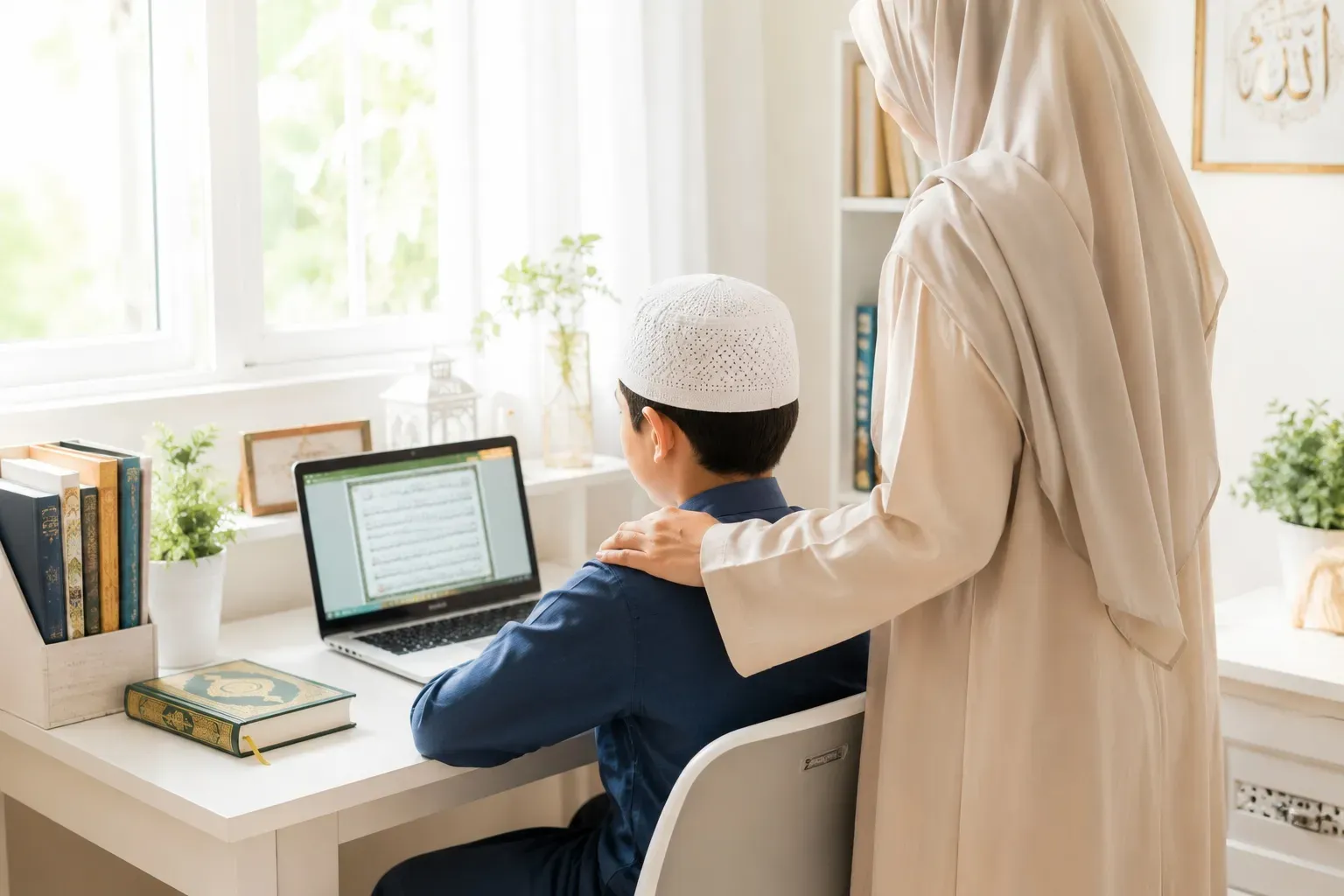
In today’s busy world, parents are always looking for meaningful ways to give their children a strong Islamic education. One of the most important parts of that journey is helping children learn the Qur’an correctly, consistently, and with love.
For many families, especially those living in the UK, USA, Canada, Europe, Australia, or other countries where access to a qualified local Quran teacher may be limited, online Quran classes for kids have become a practical and flexible option.
But choosing an online Quran class is not simply about finding someone who can teach a child to read Arabic. A good Quran learning program should help children develop correct pronunciation, Tajweed, confidence, consistency, and a lasting connection with the Qur’an.
Why Are Online Quran Classes for Kids Becoming Popular?
Traditional learning has always had an important place in Islamic education. However, modern families often have demanding schedules. Children may attend school during the day, participate in extracurricular activities, and have limited time in the evening.
Online Quran learning can make the process more flexible.
A child can attend a live Quran lesson from home without spending time travelling to a mosque or learning centre. Parents can also choose a schedule that fits around school and family commitments.
Digital education can expand access to learning, but quality and meaningful teacher interaction remain important. UNICEF’s digital education guidance similarly emphasizes that technology should support learning outcomes and meaningful human connection rather than simply replace traditional interaction.
For Quran education, this means the technology should remain a tool—the teacher, curriculum, feedback, and relationship with the student should remain at the centre.
What Should Children Learn in Online Quran Classes?
A well-structured Quran class for children should be appropriate for the child’s age, ability, and learning goals.
1. Noorani Qaida and Arabic Reading
Beginners need a strong foundation before moving into fluent Quran reading.
Children can learn Arabic letters, joining letters, vowel signs, pronunciation, and basic reading patterns step by step.
A strong foundation helps prevent pronunciation mistakes later.
2. Quran Reading With Tajweed
Once children become comfortable with basic reading, they should gradually learn Quran with Tajweed.
Tajweed teaches students how to pronounce Quranic letters correctly and apply the appropriate rules while reciting.
The Qur’an itself instructs believers to recite it with measured recitation:
“…and recite the Qur’an with measured recitation.”
— Qur’an 73:4
Therefore, Quran reading should focus not only on speed but also on accuracy and beautiful, respectful recitation.
3. Short Surah Memorization
Children can gradually memorize selected short Surahs according to their ability.
Short Surahs from Juz Amma can provide achievable goals and help children build confidence.
4. Daily Duas and Islamic Knowledge
Quran education can also be connected with everyday Islamic life.
Children may learn basic duas, manners, Salah-related Surahs, and age-appropriate Islamic knowledge alongside Quran reading.
This helps them understand that learning the Qur’an is not only an academic activity—it is part of their daily life.
What Makes a Good Online Quran Teacher?
Choosing the right online Quran teacher is one of the most important decisions parents make.
A teacher should have strong Quranic knowledge, correct recitation, patience, communication skills, and experience working with children.
But qualifications alone are not enough.
Children learn differently.
Some students need repetition. Some need encouragement. Others learn faster through visual examples or interactive activities.
A good teacher recognizes these differences and adjusts the lesson accordingly.
The best online Quran classes for kids should feel structured but encouraging—not stressful.
One-to-One Quran Classes vs Group Classes
Parents often ask whether they should choose individual or group Quran lessons.
One-to-One Classes
With one-to-one Quran classes, the teacher can focus entirely on one student.
This allows the teacher to:
- Correct pronunciation immediately
- Adjust the lesson to the child’s level
- Track individual progress
- Spend more time on difficult verses
- Create a personalized learning pace
For younger children and beginners, this can be especially useful.
Group Classes
Group classes can provide social interaction and peer motivation.
However, the teacher has to divide attention between multiple students.
For families looking for highly personalized learning, one-to-one lessons may be a better option.
How Can Parents Help Their Children Learn Quran Online?
Parents do not need to become Quran teachers to support their children.
Small habits can make a significant difference.
Create a Regular Schedule
Consistency is more important than studying for a very long time once a week.
A short, focused lesson repeated regularly can help children develop a stable Quran learning routine.
Create a Quiet Learning Space
A clean, quiet space can help children focus during their online Quran lesson.
Keep unnecessary devices and distractions away during class.
Encourage Rather Than Pressure
Children should associate the Qur’an with love, peace, and encouragement.
If a child makes a mistake, correction should be gentle and constructive.
Celebrate Progress
Small achievements matter.
Completing a Surah, improving pronunciation, or reading a difficult passage correctly can all be celebrated.
How to Choose the Best Online Quran Classes for Your Child
Before enrolling, parents should consider several questions:
- Are the teachers qualified?
- Are classes live and interactive?
- Is Tajweed included?
- Is the curriculum suitable for children?
- Are classes one-to-one or group-based?
- Can the schedule fit the child’s routine?
- Do parents receive progress updates?
- Is there a trial class?
- How does the teacher handle younger children?
- Is the learning environment safe and professional?
These questions can help parents compare different online Quran classes for kids instead of choosing based only on price.
Building a Lifelong Connection With the Qur’an
The ultimate goal of Quran education should be more than finishing a syllabus.
The goal is to help children develop a relationship with the Qur’an that continues throughout their lives.
The Prophet ﷺ said:
“The best of you are those who learn the Qur’an and teach it.”
— Sahih al-Bukhari 5027
When children learn the Qur’an with correct guidance, patience, and encouragement, they gain more than a new academic skill.
They develop a foundation for lifelong Islamic learning.
Final Thoughts
Finding the right online Quran classes for kids can make Quran education accessible to families wherever they live.
Whether a child is starting with Noorani Qaida, learning Quran with Tajweed, improving recitation, or beginning memorization, the right teacher and structured learning environment can make the journey more enjoyable and effective.
The most important thing is to start with consistency, patience, and sincere intention.
Give your child the opportunity to learn the Qur’an—and help them build a connection that lasts a lifetime.
FAQ
Are online Quran classes good for kids?
Yes. Live online Quran classes can provide flexible access to qualified teachers and personalized instruction when the program is structured around the child’s needs.
What age should children start learning Quran?
Children can begin Quran education at an age appropriate to their development, often starting with basic Arabic letters and reading before progressing to Tajweed and memorization.
How can my child learn Quran online?
A child can join live online Quran lessons using a computer, tablet, or smartphone with a qualified Quran teacher.